
Fallopian Tube Recanalization
- Home
- Fallopian Tube Recanalization
Fallopian Tube Recanalization (FTR) is a minimally invasive image-guided procedure performed by an interventional radiologist to open a blocked fallopian tube. It is mainly used in women who have infertility caused by a blockage near the uterus (proximal tubal blockage).
Instead of surgery, a very thin catheter and guidewire are used to gently clear the blockage, allowing the egg and sperm to meet naturally.
What are the Fallopian Tubes?
-The fallopian tubes are two thin tubes connecting the uterus to the ovaries.
Their functions are:
- Pick up the egg after ovulation
- Allow fertilization by sperm
- Transport the fertilized egg to the uterus
If one or both tubes are blocked, pregnancy may become difficult.
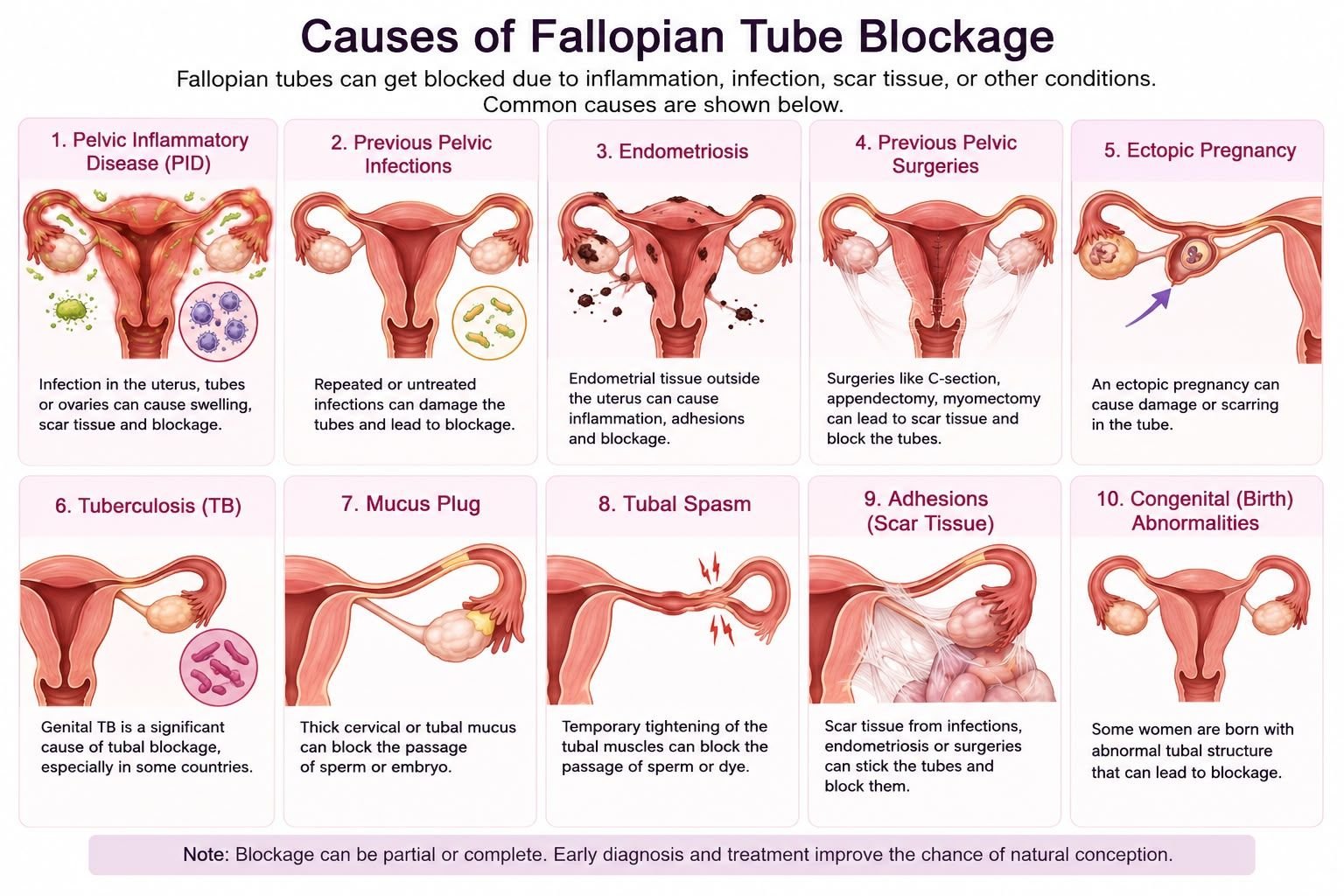
Causes of Fallopian Tube Blockage
Common causes include:
- Pelvic Inflammatory disease (PID)
- Previous pelvic infection
- Endometriosis
- Previous pelvic surgery
- Previous ectopic pregnancy
- Tuberculosis (in some countries)
- Mucus plugs
- Tubal spasm
- Adhesions (Minor scar tissue)
- Congenital b
- irth anomalies
Who Needs Fallopian Tube Recanalization?
The procedure may be recommended if:
- Difficulty becoming pregnant for over one year
- HSG shows blockage near the uterus
- Normal uterus and ovaries
- Partner’s semen analysis is normal
- No severe distal tubal disease
Who Should Not Undergo FTR?
It is usually not recommended if:
- Active pelvic infection
- Pregnancy
- Complete destruction of the tube
- Severe distal tubal blockage
- Hydrosalpinx
- Tubal cancer (rare)
Symptoms of Tubal Blockage:
Many women have no symptoms.
Some may experience:
- Infertility
- Chronic pelvic pain
- Painful periods
- Previous pelvic infection
- Previous ectopic pregnancy
Preparation Before the Procedure:
The patient may be advised to:
- Fast for a few hours (if sedation is planned)
- Stop blood thinners if taking 3 days prior
- Take prescribed antibiotics if advised
- Empty the bladder
- Avoid intercourse before the procedure if instructed
- Sign informed consent
Pre Procedure Evaluation:
1. Clinical Assessment
The doctor reviews:
- Medical history
- Infertility history
- Menstrual history
- Previous pregnancies
- Previous miscarriages
- Previous pelvic infections
- Previous surgeries
- Current medications
- Allergies
2. Blood Tests
- Complete Blood Count (CBC)- WBCs, RBCs, Platelet- To rule out anemia and any signs of infection
- Blood sugar (if required)
- Coagulation profile (PT/INR)- to know body’s ability to clot, helping reduce the risk of bleeding
3. Imaging Tests
Common investigations include:
- Hysterosalpingography (HSG)- Main test to identify the location and extent of tubal blockage
- Pelvic ultrasound– To asses the uterus, ovaries, cervix and surrounding pelvic structures for any abnormalities.
- Sometimes MRI or laparoscopy (if needed)- may be recommended if additional information is needed or if other pelvic conditions, such as endometriosis or severe adhesions, are suspected.
Procedure of Fallopian Tube Recanalization:
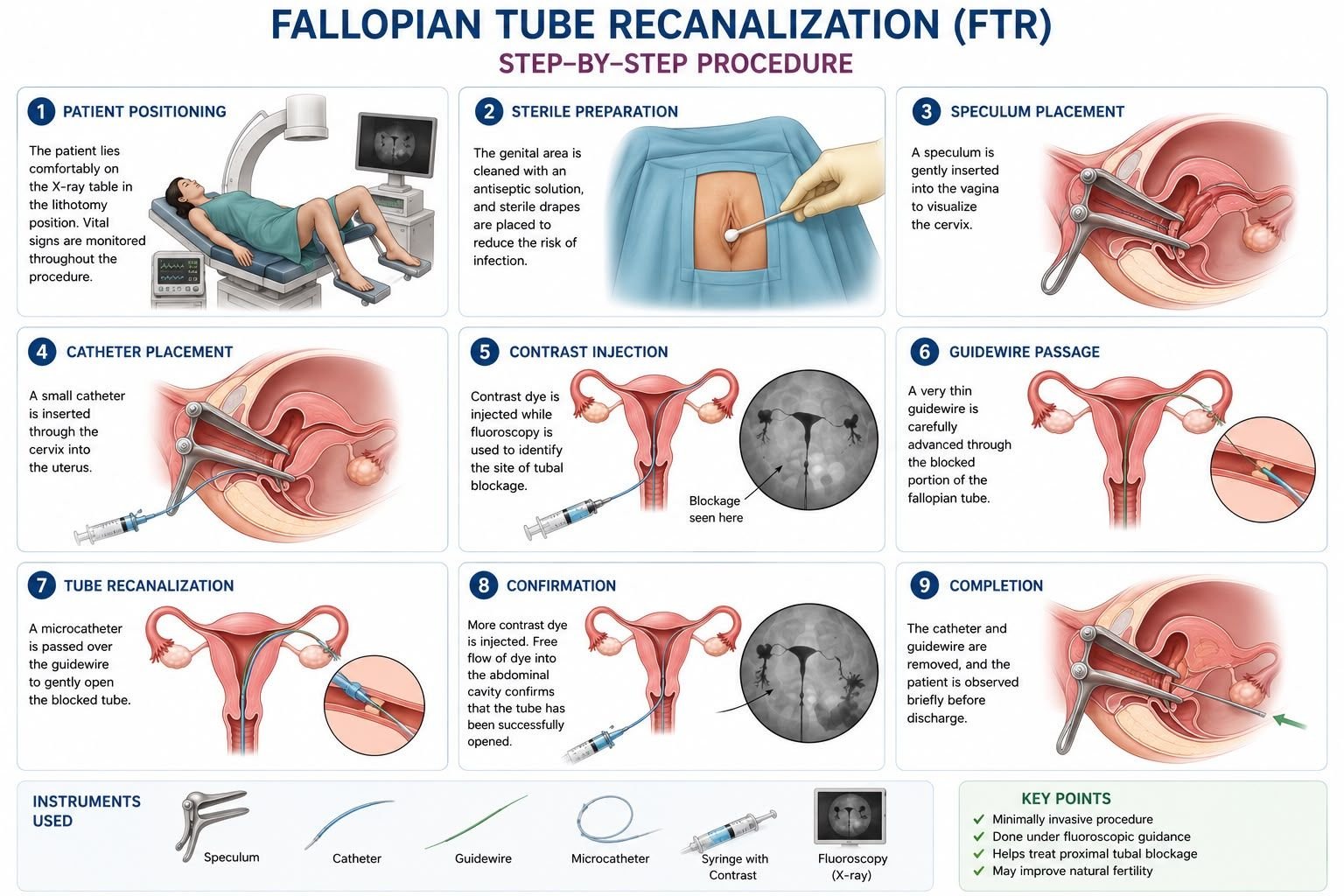
Step 1: Patient Positioning
-The patient lies comfortably on the X-ray table in the lithotomy position. Vital signs are monitored throughout the procedure.
Step 2: Sterile Preparation
-The genital area is cleaned with an antiseptic solution, and sterile drapes are placed to reduce the risk of infection.
Step 3: Speculum Placement
-A speculum is gently inserted into the vagina to visualize the cervix.
Step 4: Catheter Placement
-A small catheter is inserted through the cervix into the uterus.
Step 5: Contrast Injection
Contrast dye is injected while fluoroscopy is used to identify the site of tubal blockage.
Step 6: Guidewire Passage
-A very thin guidewire is carefully advanced through the blocked portion of the fallopian tube.
Step 7: Tube Recanalization
-A microcatheter is passed over the guidewire to gently open the blocked tube.
Step 8: Confirmation
-More contrast dye is injected. Free flow of dye into the abdominal cavity confirms that the tube has been successfully opened.
Step 9: Completion
-The catheter and guidewire are removed, and the patient is observed briefly before discharge.
Benefits:
- No surgical incision
- Minimally invasive
- Quick recovery
- Same-day discharge
- Can improve natural fertility
- May avoid surgery
- High technical success for proximal blockages
Risks and Complications:
Although uncommon, possible complications include:
- Mild pain or cramping
- Light vaginal bleeding
- Infection
- Allergic reaction to contrast dye
- Tubal perforation
- Failure to open the blockage
- Radiation exposure (very low)
After the Procedure:
Most patients:
- Rest for a few hours
- Go home the same day
- Resume light activities within 24 hours
- May have mild cramping or spotting for 1–2 days
Post-Procedure Instructions:
- Drink plenty of fluids
- Take prescribed medicines
- Maintain good hygiene
- Avoid intercourse for a short period if advised
- Attend follow-up appointments
- Contact your doctor if you develop severe pain, fever, heavy bleeding, or foul-smelling vaginal discharge
Follow-Up
-The doctor may advise:
- Follow-up clinic visit
- Fertility planning
- Repeat HSG if needed
- Consultation with a fertility specialist if pregnancy does not occur
Advantages
- Minimally invasive
- Outpatient procedure
- No surgical incision
- Quick recovery
- Preserves the fallopian tube
- Can improve natural fertility
- May improve the chance of natural conception
- High technical success for proximal blockages
Limitations
- Not effective for severe distal tubal disease
- Some blockages may recur
- Pregnancy is not guaranteed
- Other infertility factors may still need treatment
Would you like to request an appointment?
You can call on +91-98200 86520 for Appointments or fill the form below